


Translation Mistakes That Cost Law Firms Millions — And How to Avoid Them
🛑 1. Introduction
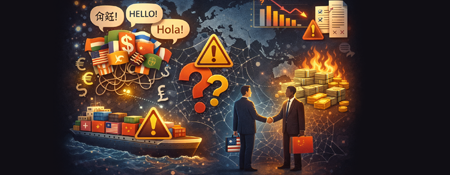
Accurate legal translation is essential for cross-border contracts, arbitration filings, discovery materials, corporate documents, and regulatory submissions. A single mistranslated term, altered punctuation mark, or misunderstood clause can change the legal meaning of an agreement, shift liability, weaken legal arguments, or delay proceedings.
Each year, U.S. law firms encounter financial loss, credibility issues, and procedural setbacks due to translation errors that could have been prevented with proper linguistic and legal expertise.
This guide summarizes the most common reasons legal translations fail, presents anonymized real-case examples based on aggregated cross-border disputes, and outlines best practices for protecting your clients from costly risks
In this guide you will learn:
-
- Why legal translation often fails
- Real legal cases where translation mistakes led to financial or procedural damage
- High-risk document categories
- Best practices for litigation, arbitration, discovery, and regulatory work
- How Kalite Legal Translations supports law firms with ISO-aligned workflows
🛑 2. Why Legal Translation Fails
Even translators with strong language skills may struggle with legal content. Legal translation requires more than bilingual proficiency—it demands an understanding of legal systems, jurisdiction-specific concepts, and the implications of every clause.
The most common causes of failure include:
- Misinterpretation of legal terminology
Terms such as “consideration,” “security interest,” “specific performance,” or “assignment” may be translated into generic equivalents that lose legal effect.
- Incorrect transfer of jurisdiction-specific concepts
Civil law and common law systems often have no 1-to-1 equivalents, leading to misalignment of obligations and responsibilities.
- Grammar & punctuation shifts that alter meaning
A misplaced comma or a change in clause structure can redefine who is bound by a contractual obligation.
- Literal translation of standardized legal clauses
“Time is of the essence,” “entire agreement,” and “hold harmless” clauses cannot be translated literally without losing their legal meaning.
- Lack of subject-matter knowledge
Financial, technical, medical-legal, and regulatory texts require specialized knowledge that general translators simply do not have.
- Inconsistent terminology across multilingual evidence
Discovery sets of 10,000+ pages often contain repeated technical terms—when inconsistent, they undermine credibility.
🛑 3. Real Case Examples (Anonymized)
Based on aggregated arbitration, litigation, and regulatory matters handled between 2018–2024.
🟦 Case 1 — Arbitration Clause Mistranslation Extends Proceedings
A Fortune-500 manufacturer entered arbitration over a supply-chain dispute.
The English clause “termination for cause” was mistranslated in the foreign-language version as “termination if necessary” — a materially weaker expression.
Opposing counsel argued that the mistranslated version should be considered binding because it had been exchanged between parties.
This forced the tribunal to evaluate two competing interpretations.
Impact:
- Arbitration extended by 7 additional months
- Additional legal and administrative expenses: $2.4 million
- Increased discovery load due to re-evaluation of contractual intent
🟦 Case 2 — Discovery Inconsistencies Undermine Technical Evidence
In a multinational technical-litigation matter, more than 18,000 pages of multilingual discovery materials were translated under a tight deadline.
Five engineering terms (“shear force,” “bearing stress,” “allowable load,” etc.) were translated inconsistently across batches.
During cross-examination, opposing counsel presented these discrepancies as evidence of unreliable translations.
The court ordered a full secondary review, forcing the legal team to revise their evidentiary strategy.
Impact:
- Re-review cost: $680,000 in vendor fees
- 11-week delay in the litigation schedule
- Opposing counsel gained procedural advantage
🟦 Case 3 — Regulatory Filing Rejected Due to Translation Errors
A pharmaceutical company submitting documentation to a Latin American regulator relied on machine-translated drafts that were later partially edited.
Regulators flagged 40+ discrepancies, including:
- Wrong dosage units
- Incorrect contraindications
- Inconsistent ingredient terminology
- Misaligned annex numbers
The entire submission was returned for correction.
Impact:
- Missed market entry window by 6 months
- Estimated opportunity loss: Over $12 million
- Emergency retranslation required (under 72 hours)
🛑 4. High-Risk Document Types
Certain document types are more prone to costly mistranslations:
- Commercial contracts and corporate bylaws
- Arbitration submissions, witness statements, and awards
- Share Purchase Agreements (SPAs)
- Patent, IP, and licensing documentation
- Real estate contracts and financial filings
- Medical-legal and insurance records
- Immigration, compliance, and regulatory submissions
- Technical annexes and product documentation
- Multilingual evidence sets in litigation
🛑 5. Best Practices for Law Firms
- Use translators with legal training or jurisdiction expertise
Legal knowledge is essential—not optional.
- Build bilingual terminology databases
Ensures consistency across documents and matters.
- Multi-stage review: translation → editing → legal review
Reduces errors and protects litigation strategy.
- Standardize multilingual clause templates
Particularly important in cross-border M&A and joint ventures.
- Maintain strict confidentiality protocols
Use secure file transfer, NDAs, and audit trails.
- Avoid machine translation for legally binding documents
Even with “post-editing,” risk remains high.
🛑 6. How Kalite Legal Translations Supports Law Firms
Kalite Legal Translations provides specialized support for U.S. and international law firms.
Our capabilities include:
- ISO-aligned workflows designed specifically for legal accuracy
- Senior linguists with legal backgrounds (law degrees or paralegal experience)
- Strict confidentiality & secure file transfer
- Terminology consistency using translation memory systems
- Experience across arbitration, litigation, and corporate matters
- Scalable teams for high-volume or urgent projects
Common practice areas we support:
- Commercial litigation
- International arbitration
- Corporate law & M&A
- Intellectual property
- Pharmaceutical & life-sciences regulatory filings
- Tax, banking, and financial transactions
- Immigration and compliance
🛑 7. Conclusion
Legal translation errors are costly but preventable.
With proper expertise, structured workflows, multi-layered review, and consistent terminology management, law firms can avoid delays, minimize financial exposure, and protect their clients’ interests.
For collaboration or inquiries:



Comment (1)
This is a valuable reminder that legal translation requires much more than simply converting words between languages. The real-world examples clearly show how small translation errors can lead to major financial and legal consequences.